
What Fed rate cuts mean for on-chain lending & borrowing
Allium's data shows more than "more liquidity = bullish crypto"


The Fed cut rates this week and signaled more easing to come. Every major crypto news headline says the same thing:
Lower cost of capital → more liquidity → bullish crypto.
But reality is more nuanced. Markets had already priced in cuts, and flows into BTC/ETH didn’t immediately spike.
So instead of stopping at the surface level story, let’s examine how rate cuts affect just one part of DeFi - lending & borrowing.
On-chain lending markets like Aave and Morpho price risk dynamically, not by regulator decree. Still, Fed policy sets the backdrop.
When the Fed cuts rates, two opposing forces are at play:
1) Inverse effect: Fed rates go down → on-chain yields go up because people seek uncorrelated assets
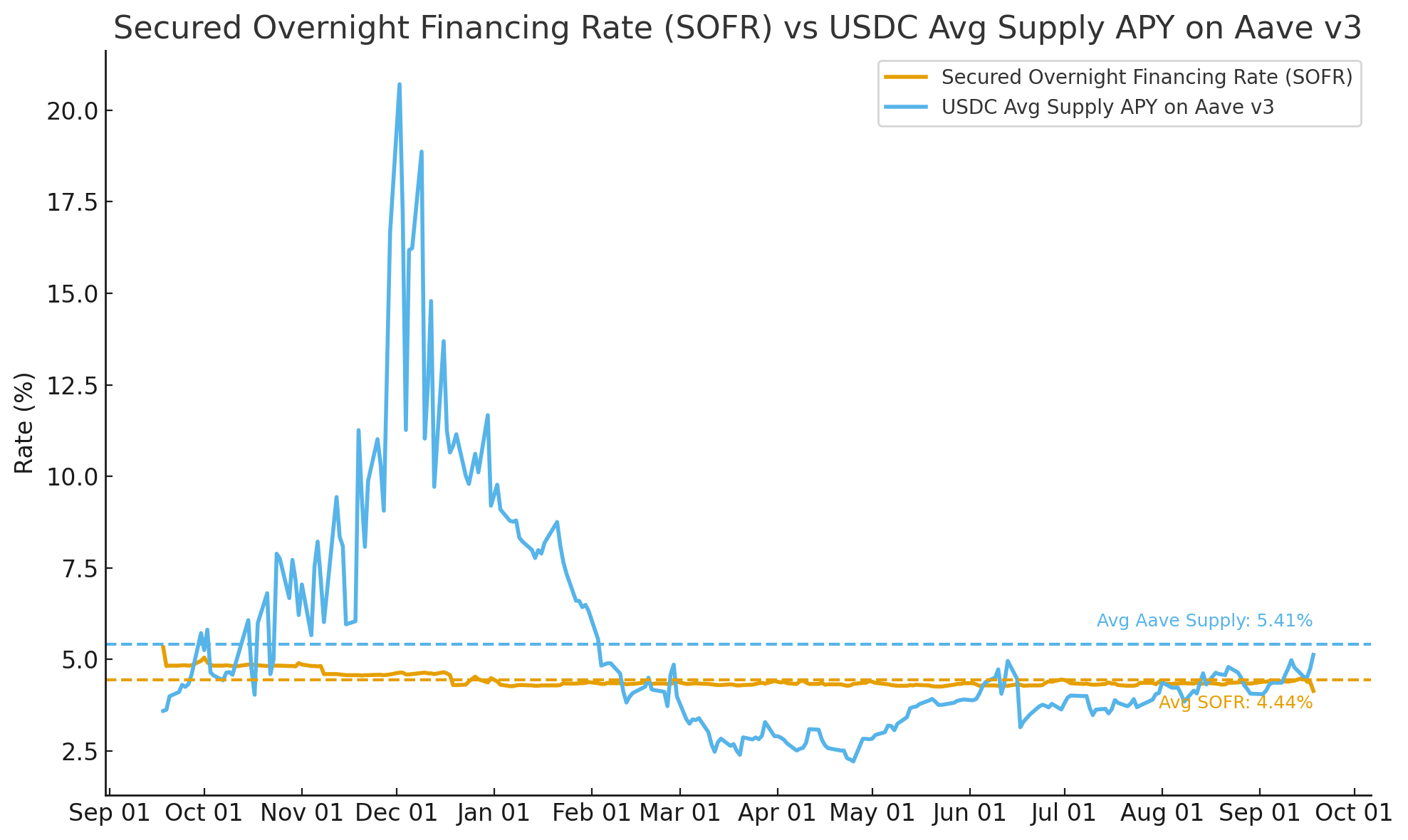
Capital searching for yield outside of traditional Treasuries/MMFs can flow into DeFi, driving utilization higher and on-chain rates up. If we look at USDC Supply APY on Aave vs. SOFR rates, we see this come into play leading up to the September rate cut.
Source: Allium
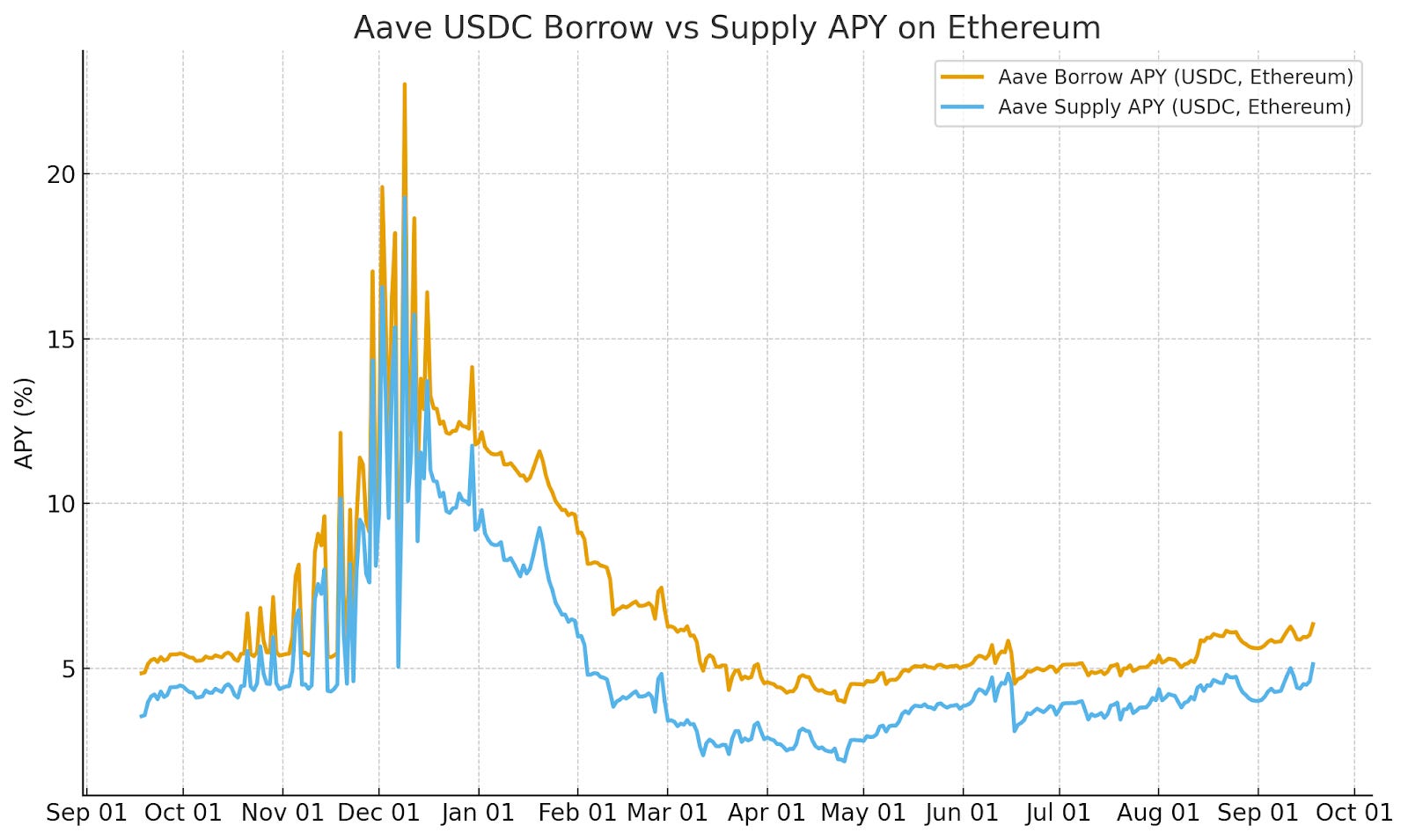
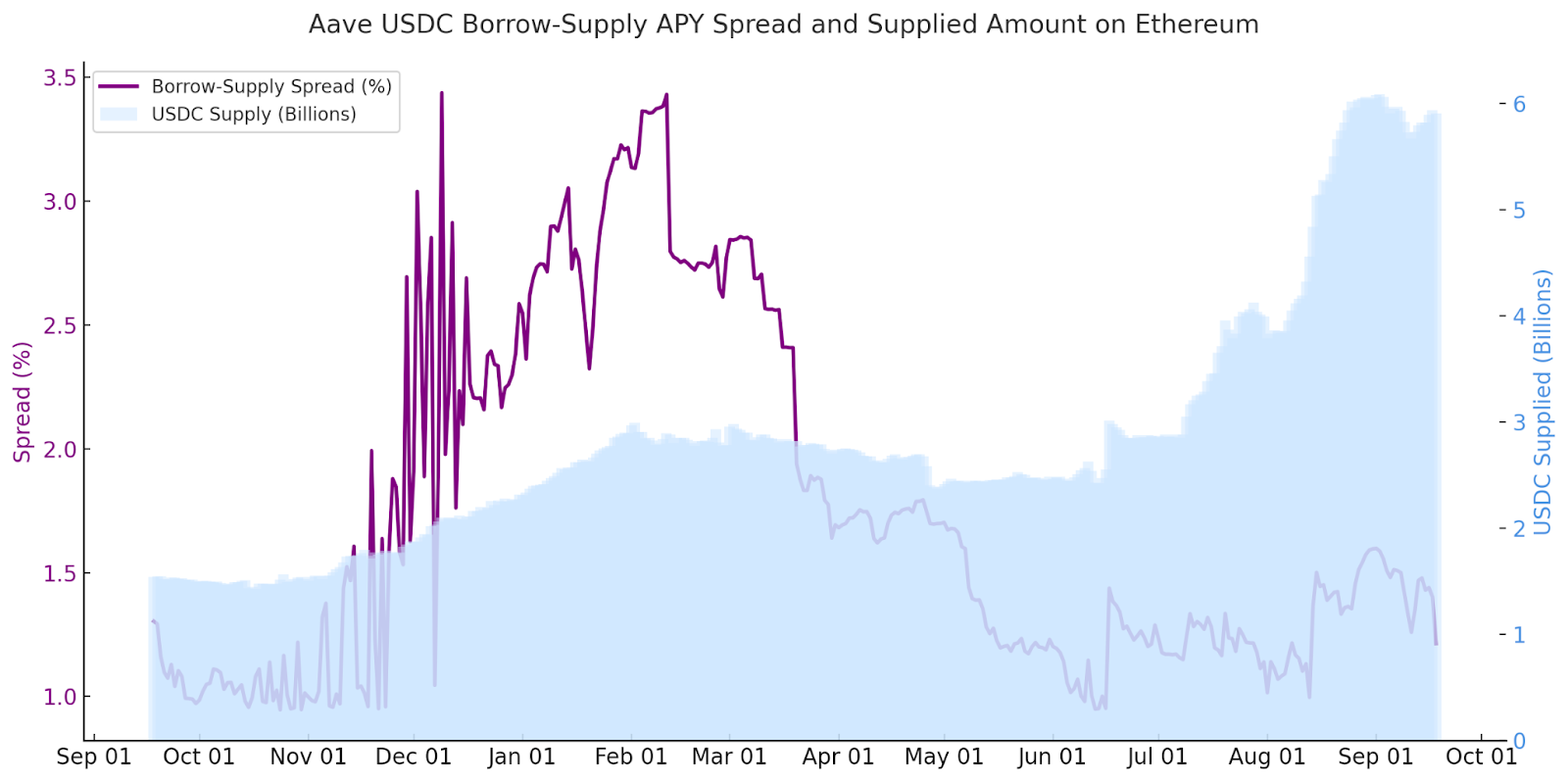
We also see this playing out as Defi borrowing-lend APY spreads decrease
In this case, the Borrow - Supply APY spread for Aave USDC on Ethereum has decreased in the days leading up to the Fed rate cut announcement, driven by more deposits chasing yield, which supports the short-term inverse effect.
Source: Allium
2) Direct correlation: Fed rates go down → on-chain yields also go down, because alternative liquidity sources get cheaper
As risk-free rates fall, alternative liquidity sources like crypto get cheaper. Borrowers refinance or lever up at lower costs, which pushes borrowing rates down both on-chain and off-chain. This dynamic usually plays out over the medium to long run.
We’re starting to see a hint of this in forward yield market data
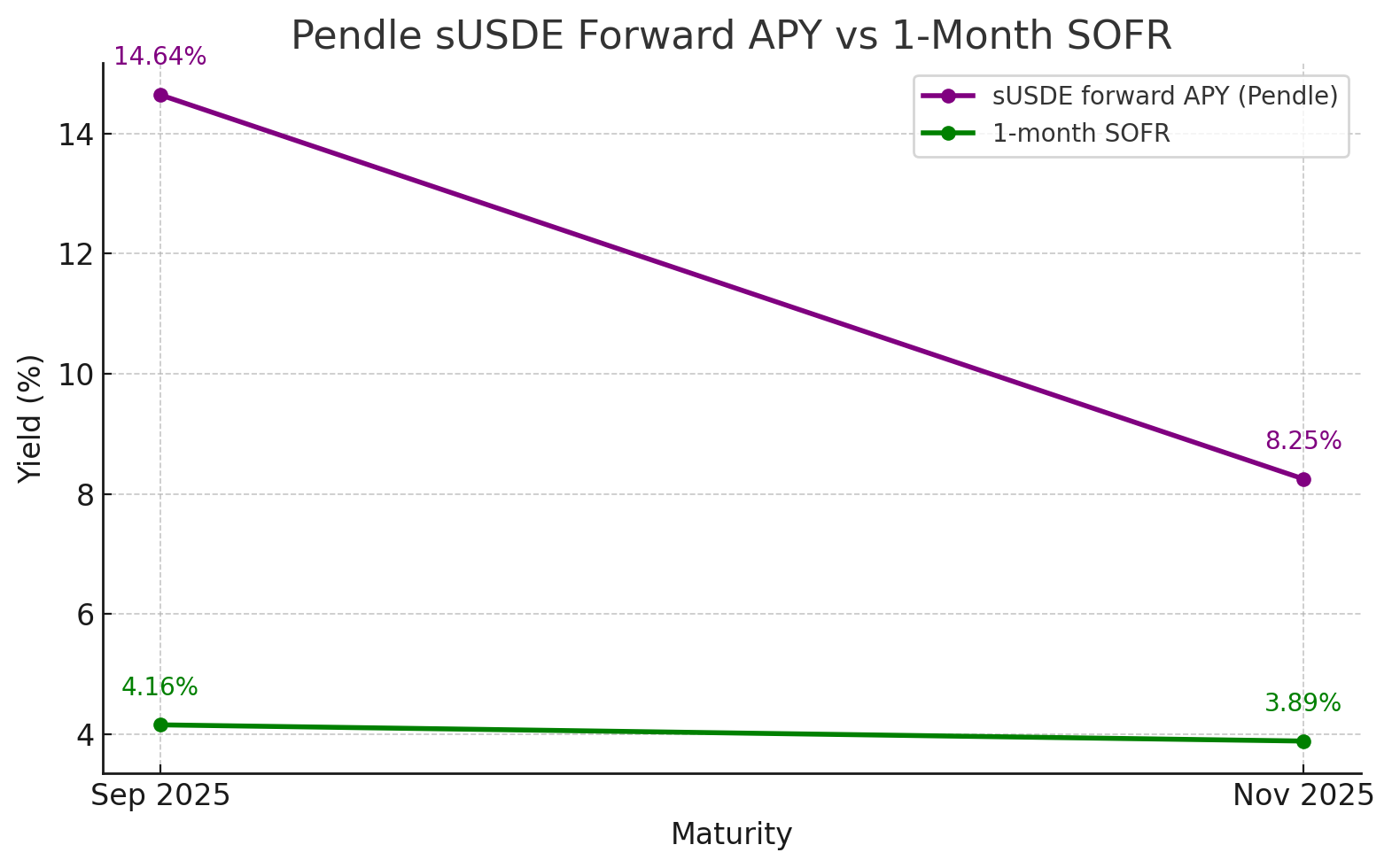
Pendle is a forward yield market for DeFi, where traders can lock in or speculate on future DeFi APYs. While not a perfect match to traditional benchmarks, its maturities line up closely enough with SOFR to make comparisons useful - for example, late September and late November.
On those dates, 1-month SOFR is pricing around 4.2% (Sep) and 3.9% (Nov). Pendle’s implied sUSDe yields for similar maturities sit much higher in absolute terms (14.6% and 8.3%). but the shape of the curve tells the story. Just like SOFR, Pendle’s forward yields are drifting lower as the Fed’s further easing gets priced in.
Source: Allium
The key point: Pendle moves directionally with traditional rate markets, but off a higher base. Traders expect to see on-chain yields decreasing in tandem with macro policy shifts.
Bottom line: it’s not as simple as the headlines say
Rate cuts don’t just flip a switch for crypto (like they often do for rotation into equities in traditional capital markets). They set the stage for various effects - decrease of on-chain yields, tighter spreads, and shifting forward curves - that ultimately shape liquidity conditions.
Beyond borrowing and lending, we can look even further at more impacts of Fed cuts on crypto markets, such as how stablecoin circulation changes as issuer yields drop or lower real yields lifting ETH staking inflows.
By mapping these effects with real on-chain data, we can move past headlines and actually see how macro policy filters into crypto.
Additional thanks to William Lai for ideation and guidance!
Get blockchain data to answer your hardest macro questions at Allium.